
The Edwardian Influencers Behind Modern Spirituality
How Cheiro and Sepharial Helped Invent the Modern Spiritual Hustle

If William John Warner and Walter Gorn Old were alive today, they wouldn’t be quietly reading charts in a private study. They would have three million TikTok followers, premium masterclass funnels, verification checkmarks, a Top Ten ranking in Spirituality on Substack, and a beautifully curated aesthetic.
We know them best by their legendary professional monikers: Cheiro, the celebrity seer who read the palms of Oscar Wilde and Mark Twain, and Sepharial, the intellectual giant of the British astrological revival. But if you strip away the grand histories, their real genius wasn’t ancient magic; it was their absolute mastery of personal branding. They didn’t just practice arythmancy or astrology; they engineered multi-layered personas specifically designed to capitalize on the esoteric.
Long before anyone coined the term “social media influencer,” these two men were running the exact same digital playbook. They are part of the direct lineage of today’s internet gurus who claim they’ve “cracked the cosmic code” or “fixed” a system like astrology or numerology.
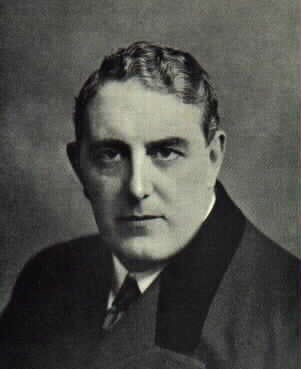
Cheiro: The Charismatic Lifestyle Guru
Born in Ireland as William John Warner, Cheiro quickly realized that a mundane name wouldn’t open the doors to London’s high-society drawing rooms. He was a journalist, war correspondent, editor, and well-travelled media professional before becoming the seer to the stars. Like a modern creator launching a high-end personal brand, he crafted a brilliant dual identity:
The Mystic Brand (Cheiro): The mysterious, worldly initiate who supposedly lived in hidden caves with master Brahmins and possessed ancient, prehistoric red-leather books written in gold leaf.
The Elite Access Card (Count Louis Hamon): To move seamlessly among the aristocracy, he claimed a fabricated aristocratic lineage, eventually legally changing his name to Count Louis Hamon.
It was a brilliant marketing funnel. As “Count Louis,” he gained access to kings, popes, and tech pioneers like Thomas Edison. Once inside the room, he deployed “Cheiro” to read their fortunes. He curated the mystery to build the hype and used the aristocratic title to justify his premium pricing.
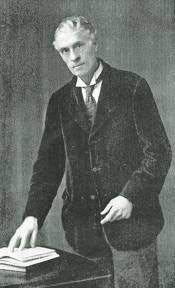
Walter Gorn Old: The “Rabbit Hole” Podcaster
While Cheiro was busy climbing the social ladder, his colleague Walter Gorn Old was running the intellectual side of things. A medical and pharmaceutical student with an interest in Orientalism before becoming an astrologer, Old didn’t change his legal name to a count, but he knew exactly how to manufacture authority. He became Sepharial for his astrological audience, and when he wanted to launch a specific system of sound vibration, he created Sheikh Habeeb Ahmad.
If Cheiro was the lifestyle influencer, Walter was the research-oriented rabbit hole podcaster who claims he’s read the hidden archives. His scientific education influenced his writings, and he approached charts, numbers, and planets with the mind of a pharmacist measuring out ingredients for a prescription. In spite of his scientific education, he took a variety of odd jobs, like a probate clerk, when astrology wasn’t paying all the bills.
He claimed his “Sheikh” system was an ancient, exotic secret from the Middle East, but Walter hadn’t been initiated by a secret Middle Eastern order; he was sitting at a desk in London. As a high-ranking member of the London Theosophical Society, he lived and worked alongside people such as Madame Blavatsky.
Walter’s true “secret source” wasn’t a hidden temple—it was the British Library reading room. In the late Victorian and Edwardian eras, London was flooded with the first major English translations of manuscripts from around the world. The Department of Manuscripts and the Department of Printed Books grew enormously during this period. This was driven by the expansion of the British Empire, technological leaps forward in transportation and printing, and a massive wave of global archaeological discoveries.
Walter sat in London, devoured academic translations from Ancient Greece, Rome, Egypt, Persia, India, and many other parts of the world. He reverse-engineered teachings from ancient mathematicians and philosophers such as Pythagoras, Plotinus, and Hypatia, and from the Hodgson Papers (a massive collection of works that preserved information on Buddhist and Hindu manuscripts and became a well-regarded repository of Mahayana Buddhism). Among these papers were translations of Sanskrit and Greek writings detailing complex cosmologies of numbers. He put all of this into a modern system that involved Western naming conventions. Then he wrapped it all up under a Middle Eastern pseudonym, wrote appendices on predicting British horse races, and sold this system to a hungry Western public.
The “Cave of Brahmins” Myth vs. The Receipts
Just like a modern YouTube creator filming a video that starts with, “The hidden ritual the mainstream media doesn’t want you to know about,” both men knew that a good backstory sells books.
But if you look for objective colonial paper trails, ship manifests, or independent local registries in India from that time, Cheiro’s grand cave initiations and Walter’s Eastern masters completely vanish. Mark Twain, after having his palm read by Cheiro, famously noted that while the man possessed a terrifyingly sharp, genius-level intuition for reading human psychology, his elaborate backstories were pure theatrical mystique.
The ultimate giveaway is right inside their own texts. If either man had actually been initiated into a pure, ancient Sanskrit lineage, their systems would reflect traditional Vedic grammar and phonetic laws. Instead, their books are meticulously tailored to analyze the English alphabet and Western calendar dates. They took ancient planetary concepts involving numbers, stripped away their complexities, and grafted them onto an English-language framework.
The Direct Descendants of the Edwardian Hustle
Watch any modern spiritual influencer who claims they have either “fixed” a traditional system or are practicing the “one true something or other” (the “I fixed astrology” guy comes to mind, as does GG33) or uncovered a “forgotten galactic light code,” you are watching Cheiro and Sepharial’s direct digital descendants. They use the exact same tactics:
The Manufactured Crisis: “The mainstream systems are broken/lying to you.”
The Exclusive Origin Story: “I discovered a secret lineage/had a sudden download/uncovered an ancient text.”
The Mask of Authority: Using pseudonyms, exotic titles, and curated aesthetics to signal a specific level of elite spiritual power.
Cheiro and Walter didn’t have algorithms, but they had society columns, publishing houses, and a public desperate for spiritual vocabulary and spiritual experiences. They leaked their own accurate predictions to the press, built an aura of extreme exclusivity, and made sure that using their ciphers was the ultimate metaphysical status symbol.
The Hidden Influencer
Missouri mystic Aso Neith Cochran is probably the one modern number mystic that I would call a true Pythagorean numerologist. She was very interested in vibration and sound/music, much like the ancient mathematician and philosopher was. She also never published any works and got into serious trouble with the authorities, much like Pythagoras. I have written about her before; you can check in the collections for information about her and also “Mrs L Dow Balliett” (Sarah Balliett). There is no historical evidence linking her to either Sepharial or Cheiro, but she did spend several years in Europe, using “mystical numbers” and “vibrational science” to consult with physicians in private clinics and to see high-end clients for readings, as Cheiro did. In fact, they moved in much the same circles in Europe and at about the same time.
They had systems that operated in parallel to each other. Aso Neith was a pioneer of the American “Vibrational” school, which focused more on musical harmonics, sound, and personal psychology. Sepharial and Cheiro were products of the British/Theosophical school, heavily rooting their systems in Hindu (Vedic) and Hebrew (Kabbalistic) sources. Recent scholarship (such as by M. Marble for the Philosophical Research Society) suggests Aso Neith actually preceded the more famous American numerologist Sarah Joanna Balliett (c. 1904). It was Balliett’s work that eventually cross-pollinated with European ideas, but Aso Neith was the forgotten original source for the American side of that tradition. Aso Neith’s teachings would also show up in the numerology taught by financier and mathematician W.D. Gann and Harvard mathematician Dr. Kevin Quinn Avery.
So once again, even though I am writing about two men from the UK who profoundly influenced (and most likely created) the modern practices of Chaldean and Vedic numerology, the trail winds back to two American women: Aso Neith Cochran and Sarah Balliett, who never seem to get remembered in popular culture, especially “Mother Cochran”, who was probably the one who started it all!
Some Final Words To Close This Up
Why does this matter for us as modern practitioners?
Because when you realize that some of the foundational builders of modern numerology were actually creative and smart, but self-promoting and very ordinary human beings who built their systems out of dusty libraries and the teachings of others who came before them, the pressure to find a “sacred, unbroken ancient system” completely dissolves. They weren’t defending a holy, unchangeable law handed down by gods or aliens; they were part of a community of people building dynamic, metaphysical tools designed to map human experience. They brought ancient teachings into a modern context.
If we go back through all the modern numerology books influencing people today that have been published since WWII, whether they call themselves Vedic, Chaldean, or Pythagorean, the closer we get to Sepharial and Cheiro, the more alike these systems all become. I can actually see the split among these three streams emerge in books by people like Harish Johari, Ashok Bhatia, Shirley Lawrence, Dusty Bunker, Norman Shine, Matthew Oliver Goodwin, Kristyna Arcarti, Heather Alician Lagan, Doris Chase Doane, and so many more.
Over the last thirty years, these three main streams have become more closed off from each other, I am sure, spurred on at least in part by the Internet, with offshoots claiming to be from unbroken Egyptian or Sumerian lines (yet using a format that is 100% lifted from authors like Dusty Bunker and Matthew Oliver Goodwin). Since the late 1980s, some people have created completely new schools of numerology that draw heavily on the work of the people I mentioned earlier, and these schools are closed ecosystems with specific levels and/or certifications (Matrix of Destiny, Human Design, and the Soul Contract Readings system come to mind).
The next time an internet gatekeeper pops up on your feed claiming they are the sole keepers of an ancient Pleiadian-Pythagorean-Vedic-Starseed secret, smile and recognize the hustle for what it is. It’s just a modern-day Walter or William, putting on a digital mask, looking for an audience to conquer. Use the tools and understand their history, but never fall for the theatrics.